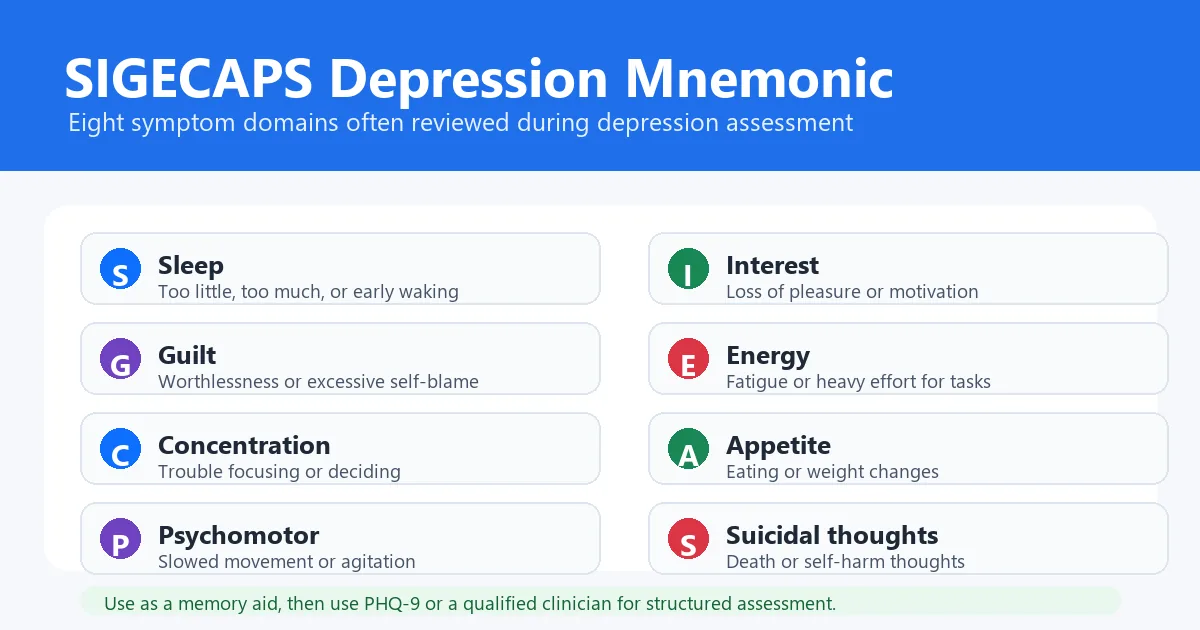
Quick answer: what is SIGECAPS?
SIGECAPS is a depression symptom mnemonic: Sleep, Interest, Guilt, Energy, Concentration, Appetite, Psychomotor changes, and Suicidal thoughts. Clinicians and students use it as a memory aid when asking about symptoms of major depression. It overlaps with common screening tools like the PHQ-9 depression test, but SIGECAPS itself is not a scored test.
Table of contents
What Each SIGECAPS Letter Means
SIGECAPS is often taught as a compact checklist for reviewing the symptom domains associated with a major depressive episode. Different textbooks may phrase the letters slightly differently, but the clinical idea is the same: look for a cluster of mood, body, thinking, behavior, and safety symptoms that last long enough to affect daily life.
SSleep changes
Sleeping too little, waking early, restless sleep, or sleeping much more than usual.
IInterest loss
Reduced interest or pleasure in activities, relationships, hobbies, or work that usually matter.
GGuilt or worthlessness
Persistent self-blame, feeling like a burden, or believing mistakes define your whole value.
EEnergy loss
Fatigue, heavy limbs, low motivation, or needing unusual effort for basic tasks.
CConcentration problems
Trouble focusing, making decisions, remembering details, or following conversations.
AAppetite or weight change
Eating much less or more than usual, or noticeable weight change not explained by another cause.
PPsychomotor changes
Moving, speaking, or thinking more slowly than usual, or feeling visibly agitated and unable to settle.
SSuicidal thoughts
Thoughts of death, self-harm, not wanting to live, or making plans to hurt yourself.
The mnemonic is useful because depression can show up beyond sadness. For some people, the first obvious signs are sleep disruption, appetite change, low energy, or concentration problems. For others, guilt, hopelessness, or loss of pleasure may be more noticeable than a constantly low mood. A structured list helps reduce the chance that important symptoms are missed.
How SIGECAPS Is Used in Depression Assessment
In clinical teaching, SIGECAPS is a way to organize symptom questions. A clinician may ask about low mood or loss of interest first, then use the mnemonic to check the other symptom domains. The goal is not to count letters mechanically. The goal is to understand symptom duration, severity, functional impact, safety risk, and whether another medical or substance-related cause may explain the changes.
The two-week pattern matters
Major depression criteria generally focus on symptoms present during the same two-week period, with a clear change from previous functioning. Occasional poor sleep, temporary low appetite, or one stressful week does not automatically mean major depression. The pattern becomes more concerning when several SIGECAPS symptoms persist most days, cause distress, or interfere with school, work, parenting, relationships, or self-care.
Five or more symptoms is a clinical clue, not a self-diagnosis
Many clinicians are taught to look for five or more depressive symptoms, including depressed mood or loss of interest, when considering a major depressive episode. That rule is a diagnostic clue used with a full evaluation. It does not replace a professional assessment, because similar symptoms can appear with grief, bipolar disorder, anxiety disorders, trauma, medication effects, thyroid problems, substance use, sleep disorders, and other medical conditions.
Use SIGECAPS as a conversation starter
If several items fit, write down examples, timing, triggers, and how symptoms affect daily life. Bring that information to a primary care clinician, therapist, psychiatrist, school counselor, or other qualified professional.
SIGECAPS vs PHQ-9: What Is the Difference?
SIGECAPS and PHQ-9 cover similar territory, but they serve different jobs. SIGECAPS is a memory aid. The PHQ-9 is a standardized nine-item questionnaire that asks how often symptoms occurred over the last two weeks and produces a severity score from 0 to 27. PHQ-9 is widely used in primary care, therapy settings, and research because it is brief, repeatable, and easier to track over time.
| Feature | SIGECAPS | PHQ-9 |
|---|---|---|
| Main purpose | Remember depression symptom domains | Screen and score symptom frequency |
| Output | No official score | 0-27 severity score |
| Best use | Preparing for a clinical conversation | Quick self-screening and symptom monitoring |
| Safety item | Suicidal thoughts are explicitly remembered | Includes thoughts of self-harm or death |
If you want a structured result you can discuss with a clinician, start with our PHQ-9 Depression Test and then use SIGECAPS to add context. For example, a PHQ-9 score can summarize severity, while SIGECAPS notes can explain what the symptoms look like in your real life.
Limitations and Common Mistakes
SIGECAPS is memorable, but it can be misused when people treat it like a diagnosis. Depression assessment requires context. The same symptom can mean different things depending on age, medical history, medications, sleep schedule, substance use, grief, trauma, and cultural background.
Mistake 1: ignoring mania or hypomania
If someone has periods of unusually elevated mood, decreased need for sleep, impulsive spending, racing thoughts, or risky behavior, depression screening alone is not enough. Those patterns can suggest bipolar spectrum symptoms and should be discussed with a clinician before starting treatment.
Mistake 2: treating suicidal thoughts as just another checklist item
The final S in SIGECAPS deserves immediate attention. Any current plan, intent, access to means, or fear that you cannot stay safe should be treated as urgent, even if the other symptoms seem mild.
If safety is a concern
In the United States, call or text 988 Suicide & Crisis Lifeline. If there is immediate danger, call emergency services. Outside the United States, contact your local emergency number or crisis service.
Mistake 3: using one symptom to explain everything
Low energy alone may be depression, but it may also relate to sleep apnea, anemia, thyroid disease, medication side effects, chronic pain, caregiving strain, or burnout. A good assessment looks at the full pattern and rules out other likely explanations.
What to Do If SIGECAPS Symptoms Fit
If several SIGECAPS symptoms describe your recent experience, take a structured next step instead of trying to decide everything from memory. The goal is to move from vague concern to clear information you can act on.
- Track timing: Note when symptoms started, how often they occur, and whether they have lasted at least two weeks.
- Measure severity: Take a validated screener such as the PHQ-9 test and save your score for discussion.
- Check function: Write down effects on work, school, relationships, sleep, appetite, hygiene, and responsibilities.
- Screen adjacent symptoms: If worry, panic, or tension are prominent, consider the anxiety and depression test as a broader starting point.
- Talk to a professional: Share your notes with a clinician, therapist, school counselor, or trusted healthcare provider.
For a broader symptom overview, read our guide to the early signs of depression. If you already took a screening questionnaire, our depression test scores guide explains how common score ranges are usually interpreted.
FAQ About SIGECAPS
What does SIGECAPS stand for?
SIGECAPS stands for Sleep change, Interest loss, Guilt or worthlessness, Energy loss, Concentration problems, Appetite or weight change, Psychomotor changes, and Suicidal thoughts.
Is SIGECAPS only for major depression?
It is most often taught in the context of major depressive disorder, but the symptom domains can also help organize conversations about persistent depressive disorder, depressive symptoms related to another condition, or mood symptoms that need professional evaluation.
Can I diagnose myself with SIGECAPS?
No. SIGECAPS is a memory aid, not a diagnostic instrument. Diagnosis requires a clinical interview, symptom duration and impairment review, safety assessment, and consideration of other mental and medical conditions.
How is SIGECAPS different from a depression checklist?
A checklist may ask you to mark symptoms. SIGECAPS is simply a mnemonic for remembering what to ask about. A scored tool like PHQ-9 is more useful when you want a repeatable severity estimate.
What should I do if the suicidal thoughts item applies?
Treat it as urgent. Contact 988 in the United States, local emergency services, or a trusted person who can stay with you while you get help. Do not wait to finish an online test if you feel unsafe.
Related resources
Take the PHQ-9 Depression Test
Use a scored screening questionnaire after reviewing SIGECAPS symptoms.
Early Signs of Depression
Compare SIGECAPS symptoms with everyday warning signs and progression patterns.
Depression Test Scores Explained
Understand what common depression screening score ranges mean.
Free Depression Screening Tools
Compare free screeners and when each tool is most useful.
References and further reading
- National Institute of Mental Health: Depression
- American Psychological Association: Clinical practice guideline for depression
- NCBI Bookshelf: DSM-5 major depressive episode symptom criteria table
- Kroenke K, Spitzer RL, Williams JBW. The PHQ-9: validity of a brief depression severity measure. Journal of General Internal Medicine. 2001.